As you must already know, Bitcoin became the first ever cryptocurrency when it was released in 2009 by Satoshi Nakamoto. Given that the maximum possible number of bitcoins generated is 21 million.
The persona Satoshi Nakamoto was involved in the early days of bitcoin, working on the first version of the software in 2009. Communication to and from Nakamoto was conducted electronically, and the lack of personal and background details meant that it was impossible to find out the actual identity behind the name.
Nakamoto’s involvement with bitcoin ended in 2010. The last correspondence anyone had with Nakamoto was in an email to another bitcoin developer saying that they had “moved on to other things.” The inability to put a face to the name has led to significant speculation as to Nakamoto’s identity, especially as cryptocurrencies increased in number, popularity, and notoriety.
However, with only one coin available, you couldn’t trade it with any other cryptocurrency.
It wasn’t until a few years later when more and more cryptocurrencies were created that people started trading them. The idea is really simple. You trade one cryptocurrency for another, with the hope that the coin you buy increases in value.
You’ve finally decided to start your cryptocurrency trading career, and you’re already thinking about how you’re going to spend your millions. There’s no doubt that cryptocurrency is an exciting market for investors, but unfortunately, success doesn’t happen as easy as that.
Many investors like to trade cryptocurrency because it’s an extremely volatile asset. If you can time the market right, trading crypto can give you much higher returns than traditional investments.
In all seriousness, cryptocurrency trading can be risky business. Yes, it’s true — some people have made lots of money. However, some people have lost lots of money too.
For those of you who are interested in learning about cryptocurrency trading, I’m here to help you get started. This beginners guide is going to show you everything you need to know.
You can begin inspecting a cryptocurrency as soon as you hear about it, before you begin any serious research:
- How did you hear about it, and what did you hear about it?
- Did you hear about it from a reliable and trusted source?
- Did you hear about the project that the currency enables?
- Or, did you hear about how much money it's going to make investors?
In this article, I will provide you with a step-by-step guide to teach you how to do your own research and find crypto gems. For this, you do not need any special skills and knowledge. All you need are patience and some determination.
So, let’s go!
1. Do Your Own Research
- Don’t invest blindly in someone calls
- Be informed about projects details
- Do you understand the project? and can you explain it?
- Can it build value over time?
2. EMOTION
- Don’t fall in love with invested projects
- Avoid FOMO, GREED and, FEAR
- Use market’s emotion to maximize profits
- Stick to a plan — means your buying and selling price should be fixed
- Anticipate high’s, don't chase high
3. Evaluating the top criteria of cryptocurrencies
3.1. Vision:
What is the objective? what they are solving? and what scale?
- Type of crypto — infrastructure/ platform
- What is the pain that this solves?
- What is the scale of pain?
- How unique is the solution?
- Can this have a first-mover advantage?
3.2. Team
Get more details on cypherhunter and visit team members LinkedIn
- Is there a superstar CEO, Exec, dev, advisor?
- Superstar = Guru in company’s niche
- Is guru well connected?
- Enough developers for vision?
- Size of team & department coverage
3.3. Technology:
(Mainly important, fundamentals)
- What does the tech achieve? speed/ power/ ease
- What is unique about the tech?
- What effect does it have over existing tech?
- Does the team have experience/ skills to achieve that tech?
- Is there an MVP (minimum viable products)/ GitHub & Test Results?
3.4. Roadmap
- Is there a roadmap on the whitepaper/ website?
- How regular are updates/items?
- How significant are the updates?
- Are they likely to release regular value?
- Min. 1 updates per quarter- start with listing
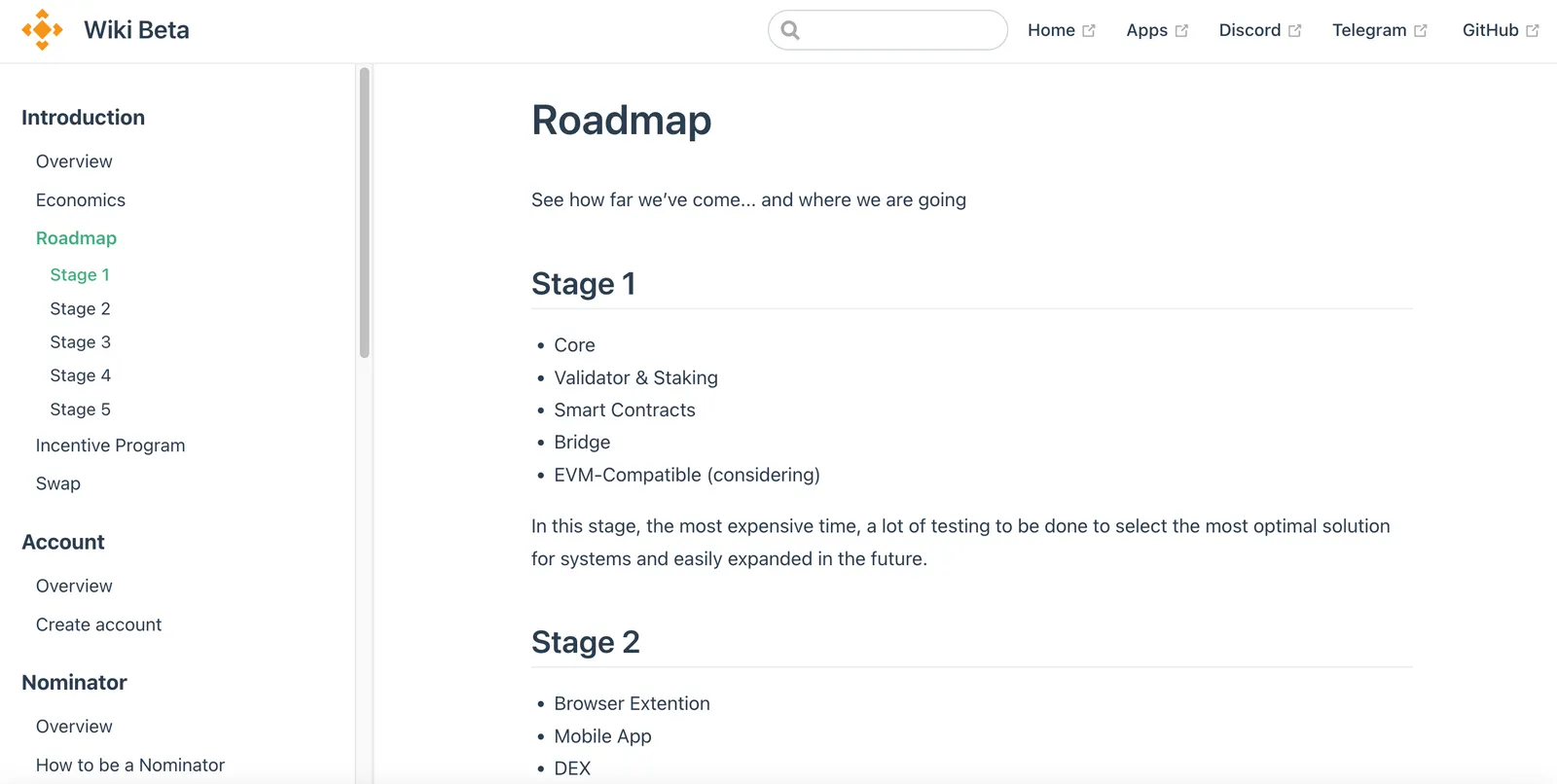
For example: Roadmap for Geek.gl
3.5. Token Metrics:
- Is cryptocurrency undervalued?
- Market cap analysis- much cheaper than competition
- ICOs & existing cryptocurrencies
- Coin supply vs potential demand
3.6. Token Reward:
- Enable Holding /Support during dips
- Masternode / stake rewards
- Does number of tokens =>power/influence
- Can you earn rewards for actions??
3.7. Community (support):
- Size of social media — TG, FB, YT, Reddit, Twitter
- High team interaction (telegram, slack, discord)
- Quality
- Forums: Reddit/ bitcoin talk
- Hype level: YT, FB, Articles
This is all of it to perform basic fundamentals research on cryptocurrency
4. Things to Look for When Researching a Cryptocurrency
Assuming that you heard about the cryptocurrency from a trusted source and it sounds solid, there are still some litmus-paper boxes that you can check before thinking about getting involved with a project.
4.1. Find the Purpose
Most cryptocurrencies are minted as a reward for verifying blocks of data that serve some function other than supporting the currency itself. If you're a Bitcoin tribalist, you may realize that Bitcoin fails this test.
That doesn't mean that Bitcoin is a scam. Bitcoin has been around long enough and has enough of a demand that supporting itself is enough. That's not likely to be true of any other coin playing this game. In other words, Bitcoin is not a scam but any coin promising to be the next bitcoin is probably a scam.
The downside of this is that it does mean that you might miss out on an opportunity to get into a project as one of the project's very first investors because you sat around waiting for a coin to prove itself. It's true. You could miss out on an opportunity to "get in on the ground floor." The good news is that you'll pass up a lot more opportunities to "get scammed."
If you really, really, really don't want to pass up what sounds like an amazing opportunity to buy up a brand new coin, get familiar with another crypto investment mantra: don't invest more than you can afford to lose.
4.2. Find the Whitepaper
The crypto shouldn't only promise to solve some a problem. It should promise to solve that problem in a way that makes sense.
Blockchain projects are typically laid out in a whitepaper—a publicly available document detailing the blockchain's mission and how it works. Even Bitcoin, which was published anonymously, has a publicly available whitepaper that is still widely read and circulated.
Having a whitepaper isn't enough. The whitepaper has to be good. For example, the Squid Game cryptocurrency that famously fleeced investors had a whitepaper, but it was poorly written and edited.
4.3. Find Out Where You Buy and Use the Cryptocurrency
Unless you're a miner (or an investor with serious acumen), you probably shouldn't buy cryptocurrency outside of a proper cryptocurrency exchange. Exchanges allow you to buy and sell cryptocurrencies, and while different exchanges require coins to jump through different hoops to get listed, you'll be safer sticking to these exchanges.
This approach has the same pitfalls as the first tip: it will take time for a new cryptocurrency to be listed on a legitimate exchange. However, we are talking about exchanges that let you buy coins, not apps that let you buy "interest" in a coin, as PayPal does. These platforms are even more cautious than exchanges, and you can miss out on a good thing waiting that long.
In some cases, the blockchain itself will make a scam coin difficult to circulate in legitimate ways because wide circulation in legitimate circles could expose the coin more quickly.
4.4. Find Out Who Makes the Coin
Right now, decentralization is the name of the game. However, most legitimate cryptocurrency projects will have a publicly listed board of directors or even partner organizations supporting and developing the currency.
You don't have to know the names of all of the board members, but you should at least recognize the names of the companies enabling or using the blockchain. Even if you don't, you should be able to research those individuals and organizations to find out whether they are real and really involved.
Depending on how rigorous you are, you may or may not think that Bitcoin fits this list. We don't know who started the ball rolling after all. However, a lot of the people who are currently pushing that ball are less than anonymous and Bitcoin.org does have ways for you to learn more about the community of developers keeping Bitcoin alive.
4.5. Find Out if the Coin Seems Sustainable
This is a combination and reconsideration of some of the red flags covered in the introductory paragraphs. A coin worth investing in should solve a problem and solving that problem should be the goal of the coin's creators, not making money.
For example, GEEK is one of the most technologically ambitious coins out there. Why? In part because GEEK is built for long-term scale rather than as a get-rich-quick scheme or even as a conventional store of value. It's meant to do a job, and the financial rewards come second.
5. Let’s start with Basic Crypto Research
- You can get the majority of information on coins at coinmarketcap.com, coingecko.com, cypherhunter.com…
- Visit coinmarketcap.com and search for the coin you want to invest in. now see if the trade volume exceeds the market cap or not? If YES then it is a good sign you are good to go ahead. (market cap = trading volume*current price)
- Now check the price graph, historical data, and past trading volume. If all of these are consistent then it is a go-ahead signal.
- Now it's time to visit the project website (you can find a link on coinmarketcap.com)
- Check what is the narratives of the project? whether it is DeFi, NFT, Smart Trading, etc. see what kind of problem they are solving?
- Now go to cypherhunter.com and search the project. you can find Venture capitalists details here. Check if the project is backed by VCs or not? and if it is then check are the VCs are good enough to move the project ahead? (you will get top tier, mid-tier, low tier VCs list ahead)
- Now you should visit the project’s social media handles such as Reddit, Telegram, medium, etc., and see if they have an active community or not? are users getting replies from the project’s members. Read their blogs on their website or medium.
- Read various articles about projects on google.
- See if they have provided a road map on their website. (some projects share and some don’t)
Before jumping on the List of VCs let’s understand what is good VC?
- Confidence — are the investor confident about projects?
- Whale Investor Network — are the investor whale investor who invest in large sums?
- Connectivity — are they well connected to top exchanges? top people in the crypto market? are they connected to top crypto influencers?
- Expertise/ marketing — are they able to create hype about a project? are they good at marketing?
Bear in mind that this kind of research can take a long time to complete. While in some cases it might not be necessary or possible to cover all of the points, I listed up in this guide about how to research cryptocurrencies and projects, your aim should be to cover as many of them as possible.
Because in the end, this is all about protecting your investment and avoiding mistakes I made a few years back. I lost a lot of money because I thought it was not worth spending some time to make sure a project was legit.
Read more: What You Should Know Before Investing in Cryptocurrency - For Beginner